Specialist-led evaluation and personalised surgical care for complex conditions of the ear, nose, throat and head & neck — with careful planning, advanced techniques and coordinated recovery support.
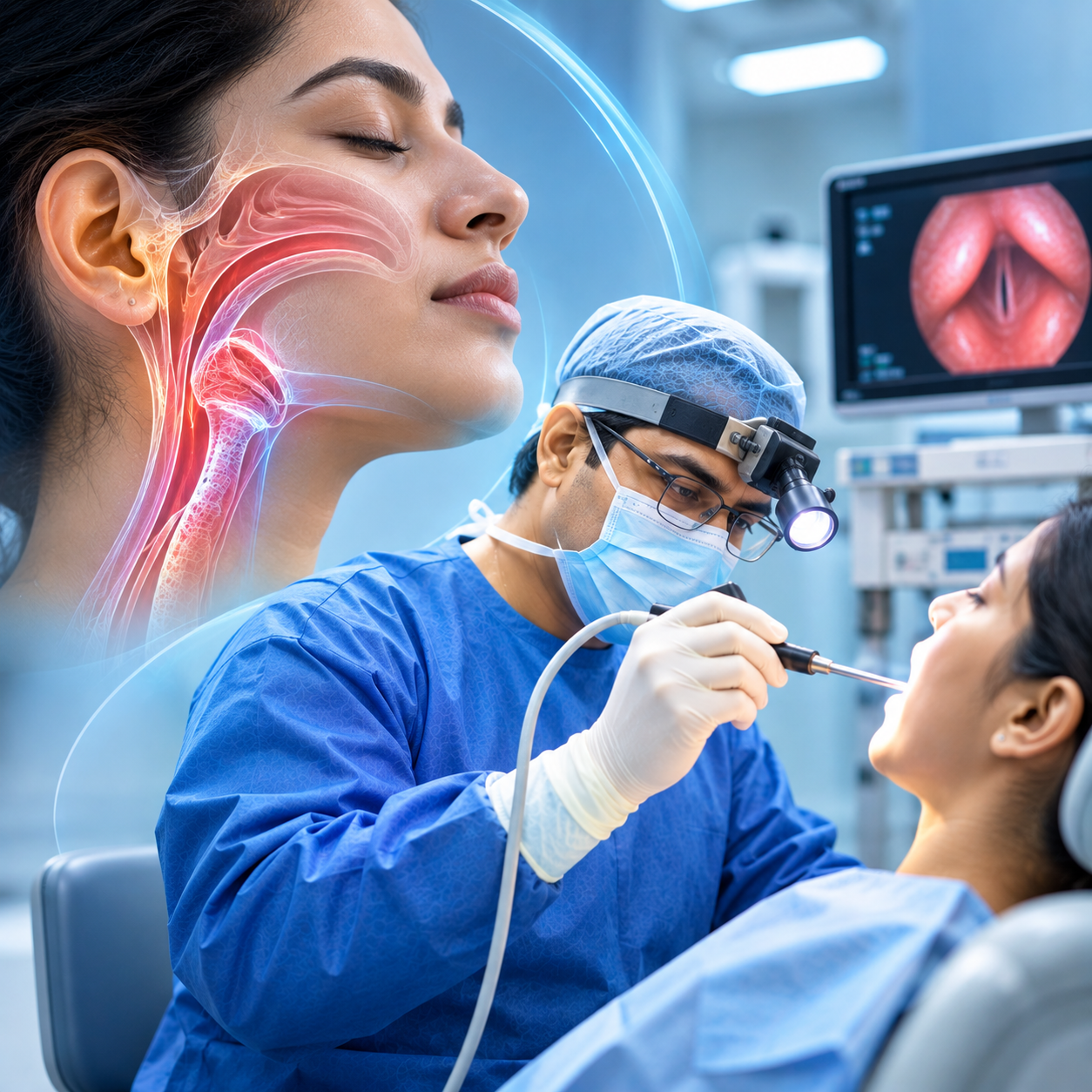

Complex ENT surgery refers to specialised procedures performed to treat conditions involving delicate or closely connected structures of the ear, nose, throat, voice box, skull base and head & neck.
These procedures may require detailed clinical assessment, imaging, endoscopic evaluation and careful surgical planning. The recommended approach depends on the diagnosis, location and extent of the condition, overall health and the patient's individual needs.
Some ENT conditions require advanced assessment and may need a specialised surgical approach depending on their complexity.
Persistent or worsening symptoms should be assessed by a qualified ENT specialist, particularly when they affect breathing, swallowing, hearing or voice.
The procedure is selected after specialist evaluation and diagnostic work-up. Depending on the condition, complex ENT care may involve endoscopic, microscopic or open surgical techniques, sometimes with support from other specialties.
Specialised access to conditions involving the base of the skull and neighbouring structures. The approach depends on the site and diagnosis.
Endoscopic or other surgical procedures may be considered for selected complex sinus, nasal and related conditions.
Surgical management of selected benign or malignant conditions in the head and neck, planned according to tumour site and extent.
Procedures involving the throat and voice box, with planning that considers breathing, swallowing and voice-related functions.
Surgery for selected thyroid and salivary gland conditions following clinical examination, imaging and other indicated investigations.
Recovery plans are individualised according to the procedure and the patient. Follow-up helps the care team monitor healing, function and any concerns.
The treating team provides guidance on prescribed medicines and managing expected postoperative symptoms.
Follow the surgeon’s instructions for wound care, dressings and signs that need medical attention.
Food texture and fluid intake may need adjustment after certain procedures, as advised by the care team.
Scheduled reviews help assess healing, symptoms and the need for further treatment or rehabilitation.
Some patients may benefit from speech, swallowing, hearing or other rehabilitation support, depending on the procedure.
If you have a complex ear, nose, throat or head and neck condition, arrange an evaluation to understand the diagnosis and available treatment options.