
Specialist-led care for cancers affecting the neck — from clinical evaluation and imaging to biopsy, surgical treatment, neck dissection, reconstruction and follow-up.
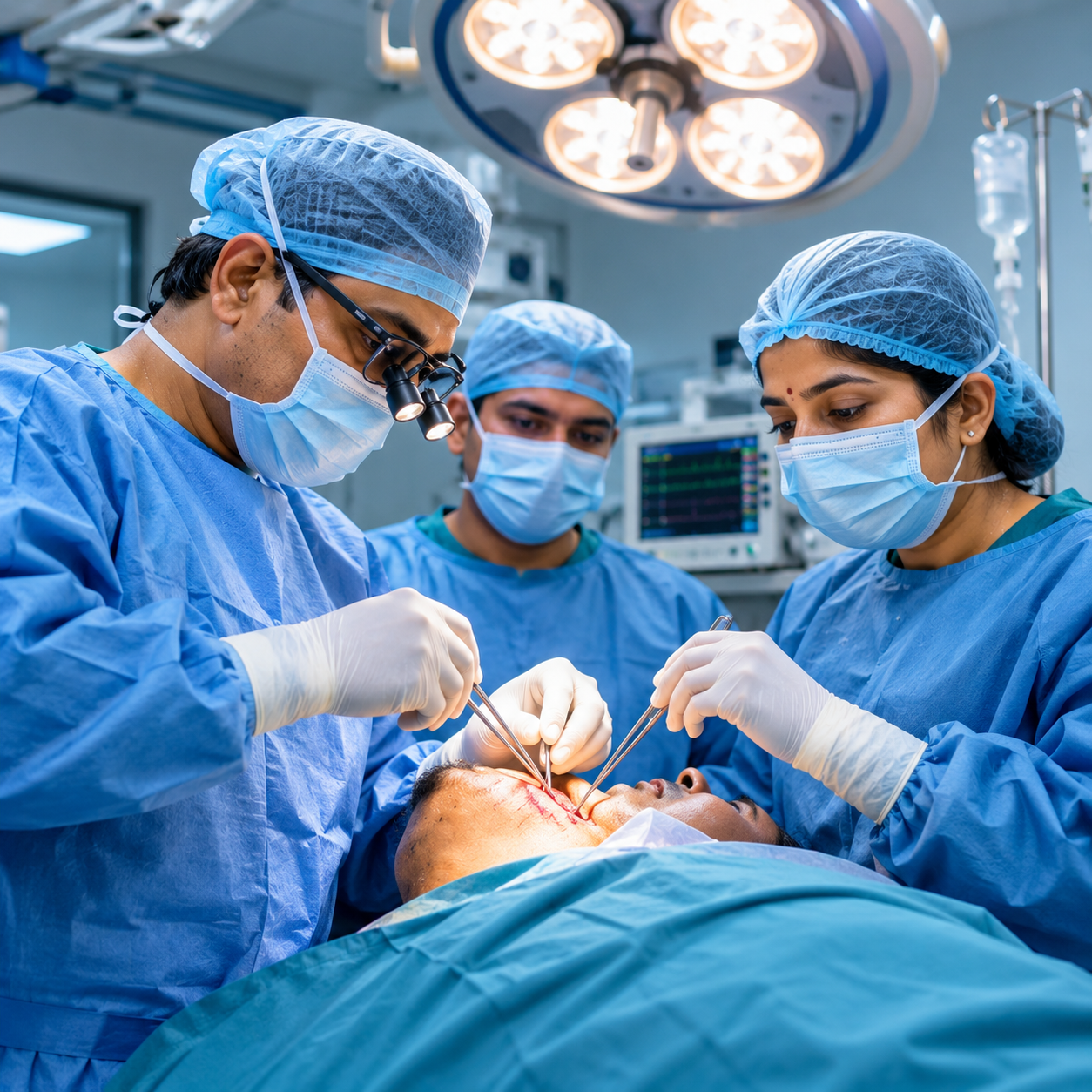
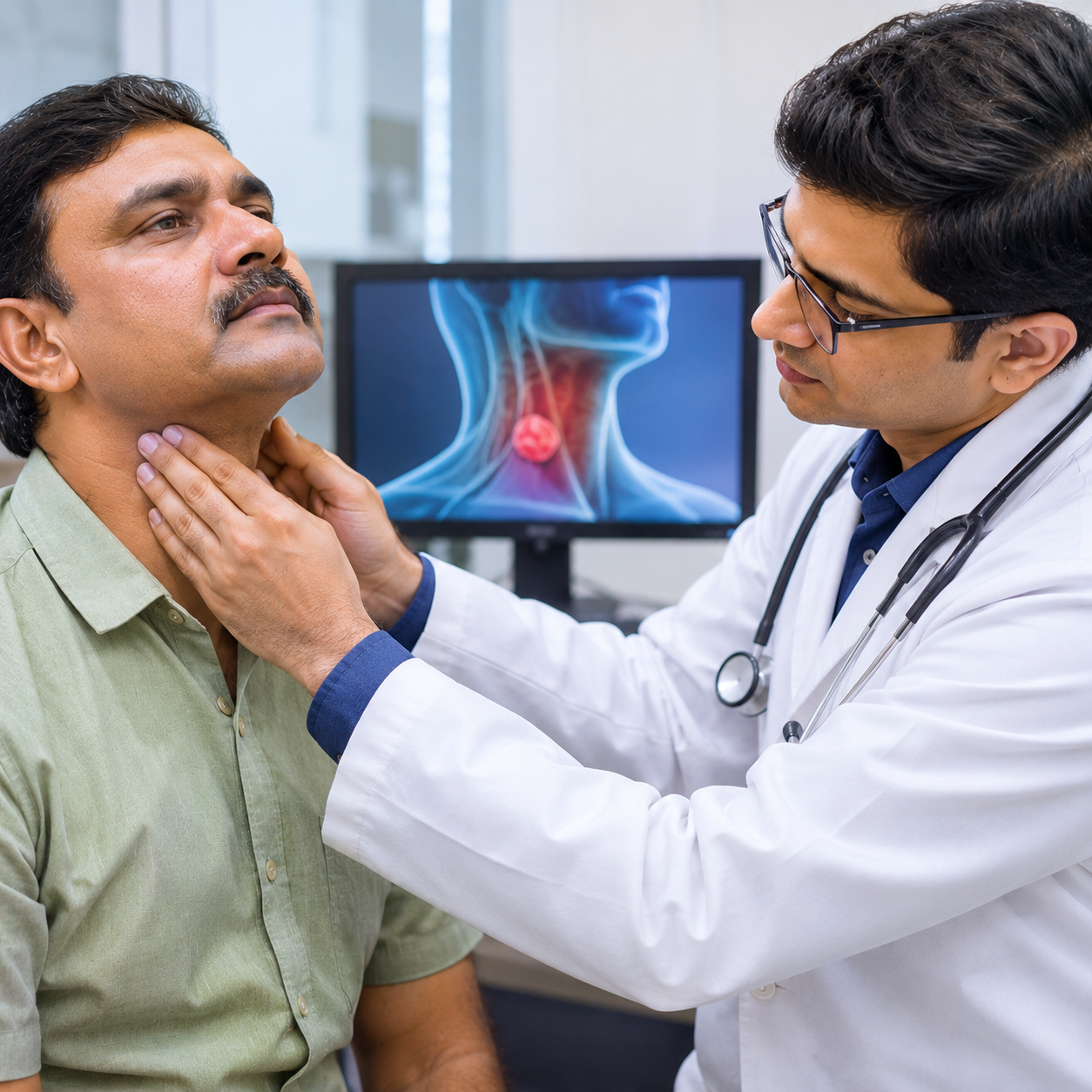
Neck cancer is a broad term often used for cancers or cancerous growths involving structures in the neck. These may include lymph nodes, thyroid gland, salivary glands and other nearby tissues. The exact diagnosis depends on where the cancer started.
A neck lump that persists, grows or is associated with swallowing or voice changes needs medical assessment. Examination, imaging and a biopsy may be recommended to identify the cause and plan appropriate treatment.
Risk factors vary with the type of cancer. They may include tobacco and alcohol exposure, certain viral infections, previous radiation exposure and some medical or family-history factors.
Symptoms depend on the site and type of cancer. A persistent or unexplained neck lump should always be assessed by a qualified clinician.
The recommended operation depends on the cancer's origin, size, stage, lymph-node involvement and nearby structures. Your specialist will explain the appropriate approach after reviewing examination and investigation findings.
Removal of selected lymph nodes and surrounding tissue in the neck when cancer has spread or is considered at risk of spreading to these nodes.
Removal of specific groups of lymph nodes based on the likely pattern of spread and the findings of the clinical assessment.
Removal of lymph-node groups with preservation of one or more non-lymphatic structures when clinically appropriate.
A more extensive operation that may be considered in selected cases when disease involves multiple neck structures.
Removal of a tumour arising in a neck structure, planned according to its location, diagnosis and relationship to nearby anatomy.
Recovery continues after surgery. Appropriate postoperative support and long-term monitoring are important components of care.
Appropriate medication and monitoring to help control postoperative discomfort.
Proper care of surgical sites to support healing and reduce infection risk.
Dietary adjustments, including liquid or soft foods when required during recovery.
Follow-up appointments help monitor recovery, recurrence and any new growths.
Stopping tobacco and reducing alcohol intake can be important parts of long-term care.
If you notice a persistent neck lump, voice change, swallowing difficulty or have been advised to undergo further evaluation, seek a specialist medical assessment.